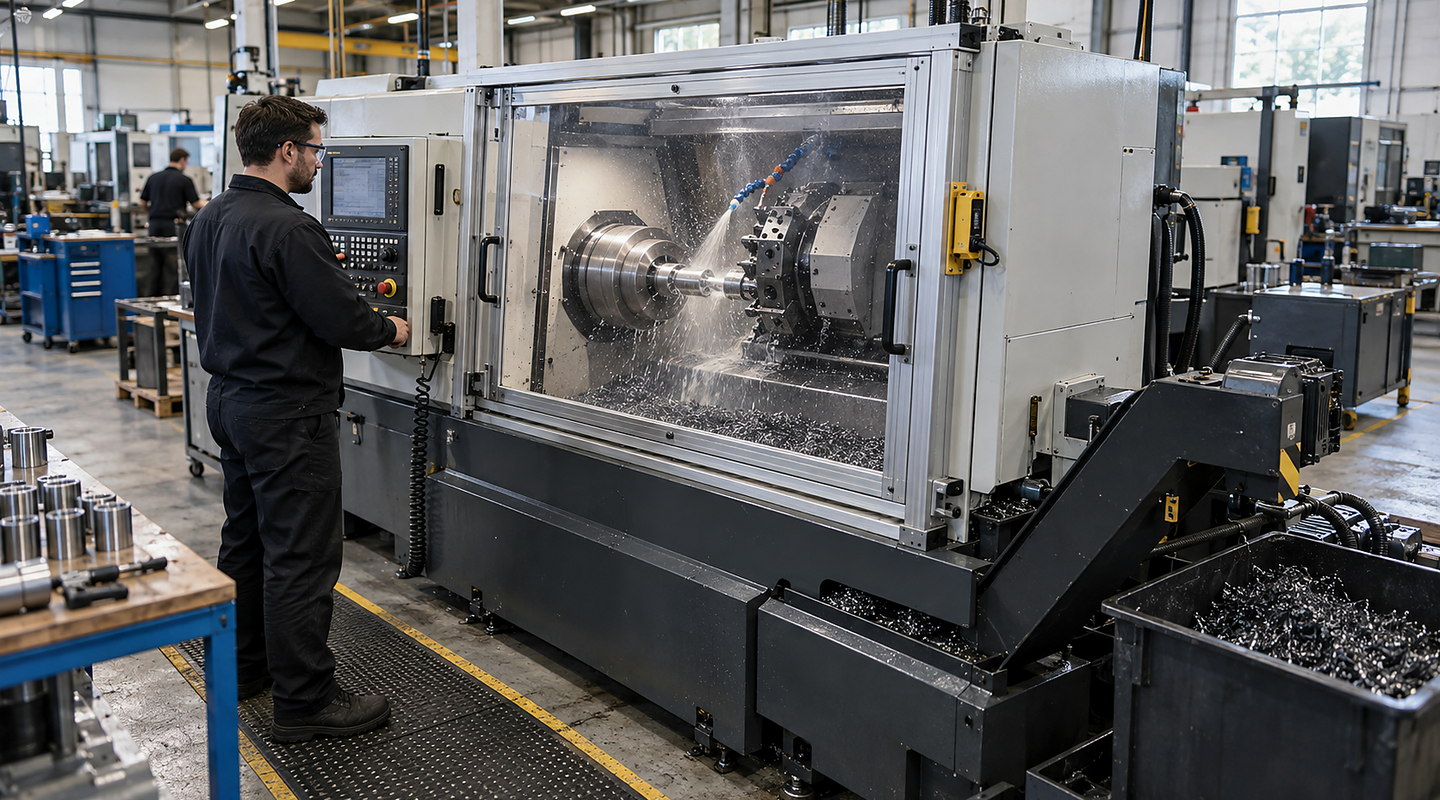
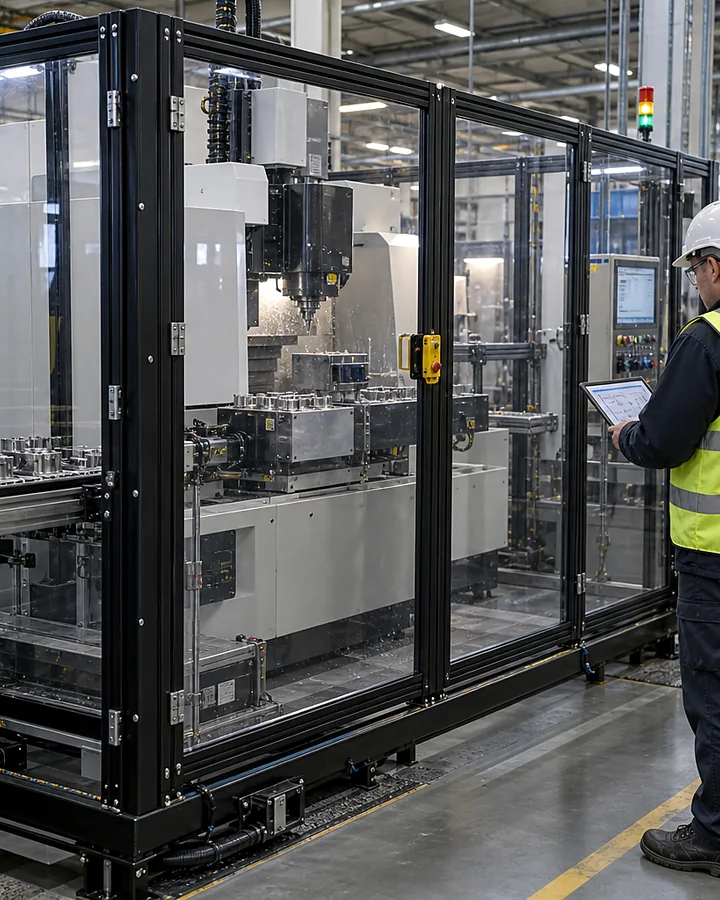
Safeguarding Existing Machinery for Grinding-Machine Guarding Projects
Plan safeguarding existing machinery for grinding-machine guarding projects around the actual machine, operator tasks, access needs and stopping behaviour, line connections, operating limits, acceptance checks and next steps.
In brief
For safeguarding existing machinery for grinding-machine guarding projects, start with the actual machine, operator tasks, access needs and stopping behaviour and your full operating sequence, then check normal production, intervention, fault and restart scenarios before committing to a final layout.
Plan grinding machine guards around your machine hazards, operator tasks, access, stopping behaviour and validation evidence. Discuss a site-specific safeguarding concept with Oxford Machine Guarding.
On the production floor
Plan for the conditions your team handles every day — Grinding Machine Guards
Plan grinding machine guards around your machine hazards, operator tasks, access, stopping behaviour and validation evidence. Discuss a site-specific safeguarding concept with Oxford Machine Guarding. For safeguarding existing machinery for grinding-machine guarding projects, the deciding details include hazards and foreseeable access for grinding-machine guarding projects, operating, cleaning and maintenance tasks and risk-reduction and validation evidence.
Details worth resolving early for safeguarding existing machinery for grinding-machine guarding projects
Question 1
Hazards and Foreseeable Access for Grinding-Machine Guarding Projects
For safeguarding existing machinery for grinding-machine guarding projects, describe the current position, required outcome, acceptable limits and known exceptions for hazards and foreseeable access for grinding-machine guarding projects. That lets us compare options against your real production rather than one nominal value.
Question 2
Machine Motion and Stopping Behaviour
For safeguarding existing machinery for grinding-machine guarding projects, describe the current position, required outcome, acceptable limits and known exceptions for machine motion and stopping behaviour. That lets us compare options against your real production rather than one nominal value.
Question 3
Operating, Cleaning and Maintenance Tasks
For safeguarding existing machinery for grinding-machine guarding projects, describe the current position, required outcome, acceptable limits and known exceptions for operating, cleaning and maintenance tasks. That lets us compare options against your real production rather than one nominal value.
Question 4
Existing Control-System Architecture
For safeguarding existing machinery for grinding-machine guarding projects, describe the current position, required outcome, acceptable limits and known exceptions for existing control-system architecture. That lets us compare options against your real production rather than one nominal value.
Question 5
Space, Visibility and Operator Ergonomics
For safeguarding existing machinery for grinding-machine guarding projects, describe the current position, required outcome, acceptable limits and known exceptions for space, visibility and operator ergonomics. That lets us compare options against your real production rather than one nominal value.
Question 6
Risk-Reduction and Validation Evidence
For safeguarding existing machinery for grinding-machine guarding projects, describe the current position, required outcome, acceptable limits and known exceptions for risk-reduction and validation evidence. That lets us compare options against your real production rather than one nominal value.
Your operating cycle
Plan for more than automatic running
Include replenishment, normal production, planned change, short stops, fault recovery, cleaning and maintenance for safeguarding existing machinery for grinding-machine guarding projects. A fast automatic step can still leave your team with a slow or awkward overall process.
Normal production and variant changes
Replenishment and material presentation
Operator access and safe interventions
Cleaning, maintenance and recovery
Prove the result
Test safeguarding existing machinery for grinding-machine guarding projects against real operating, access, stopping and recovery scenarios
Normal production
Run the agreed product or part mix for safeguarding existing machinery for grinding-machine guarding projects at your intended operating pattern.
Difficult conditions
Include credible extremes for hazards and foreseeable access for grinding-machine guarding projects and machine motion and stopping behaviour.
Fault and recovery
Show how the proposed solution detects a problem affecting safeguarding existing machinery for grinding-machine guarding projects, responds safely, informs your team and restarts under control.
Important limits
Be clear about what the trial has shown
Current standards and required performance levels must be assessed for the complete machine and intended use.
A site survey and task-based risk assessment are required before a safeguard is selected.
Mechanical changes can affect access, visibility, cleaning and machine operation.
Separate the wheel guard, viewing screen and access control
A grinding-machine retrofit should identify the purpose of each protective element before any replacement is specified. A screen that improves visibility or intercepts debris must not be assumed to provide the containment function of the machine wheel guard.
Identify the machine and abrasive operation
Record the machine identification, wheel specification and permitted operating arrangements from the manufacturer documentation. Include changes of wheel, work support or fixture. The relevant assessment is for that combination; a guard described simply as suitable for grinding does not establish compatibility.
Keep containment and reach questions separate
Have the competent designer assess wheel enclosure, access to moving parts and foreseeable ejection hazards as distinct issues. Record which existing part performs each function and whether the proposed change affects it. Do not remove an original protective enclosure merely because a clearer front screen is being added.
Review the workpiece and intervention envelope
Show the largest and smallest workpieces, how they are supported and how the operator adjusts or dresses the equipment. Include wheel changing, cleaning and inspection in the access plan. These activities should follow the assessed safe method and manufacturer instructions, rather than an improvised gap in the guard.
Specify the handover record
Request an updated arrangement drawing, the scope of the assessment and any operating limitations introduced by the retrofit. Record inspections and functional checks appropriate to the installation. A new guard does not remove the need for abrasive-wheel training, suitable equipment condition or the other precautions relevant to the process.