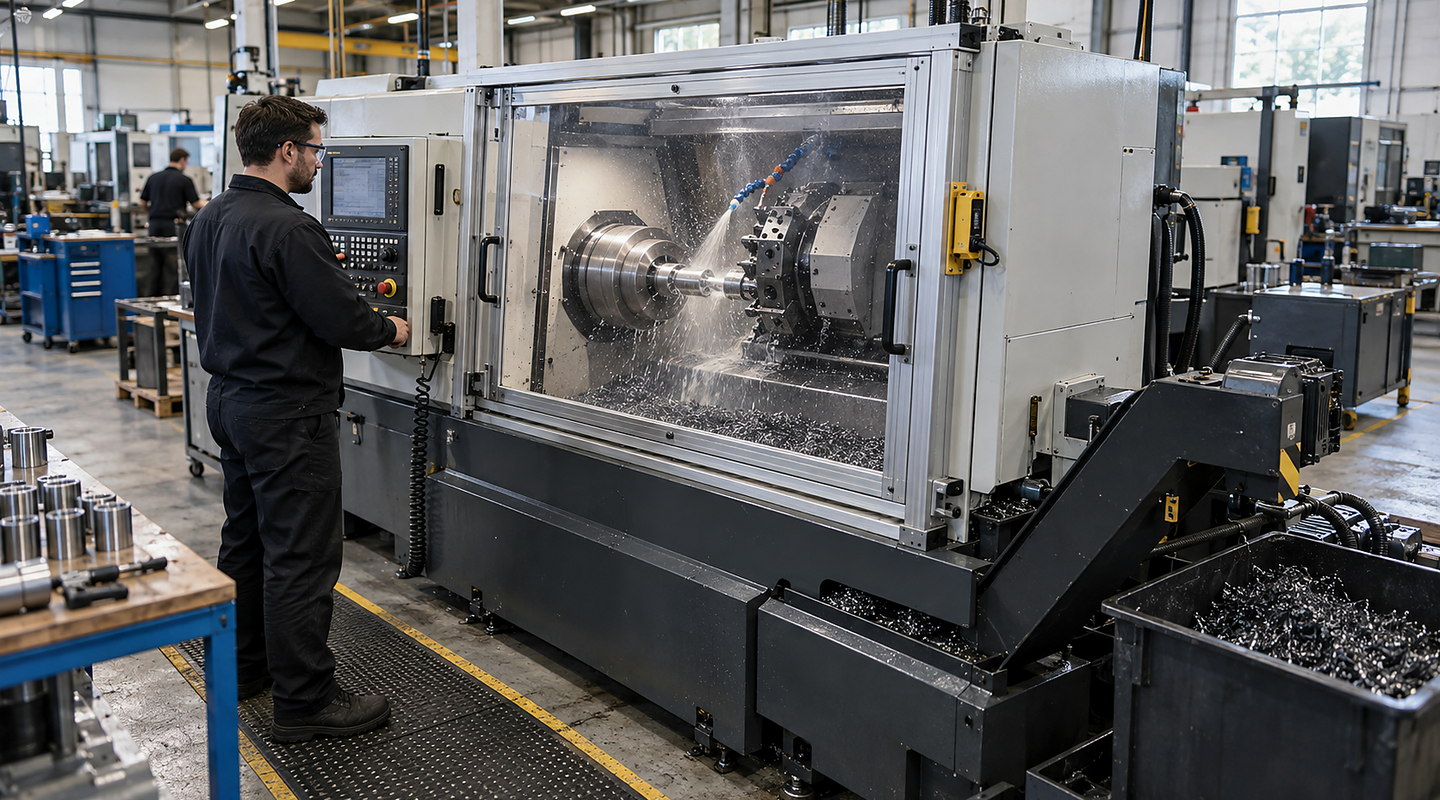
Grinding Machine Guards Selection Guide
Compare grinding-machine guarding by protective purpose, wheel and machine information, task access, stopping behaviour, controls, mounting and validation evidence.
Compare safeguarding concepts against the same machine, abrasive tooling and task assessment. Separate wheel containment from viewing and access control. Include workpiece loading, adjustment, wheel changing and cleaning, and agree the inspection and validation evidence for the installed modification.
Follow the survey-to-handover sequence and same validation record for each concept. Do not choose panel material, thickness, a sensing device or a control arrangement from appearance or a nominal specification alone.
Compare options in the conditions where they must work — Grinding Machine Guards
Plan grinding machine guards around your machine hazards, operator tasks, access, stopping behaviour and validation evidence. Discuss a site-specific safeguarding concept with Oxford Machine Guarding. A useful shortlist should show how every option copes with hazards and foreseeable access for grinding-machine guarding projects and space, visibility and operator ergonomics.
Discuss your application
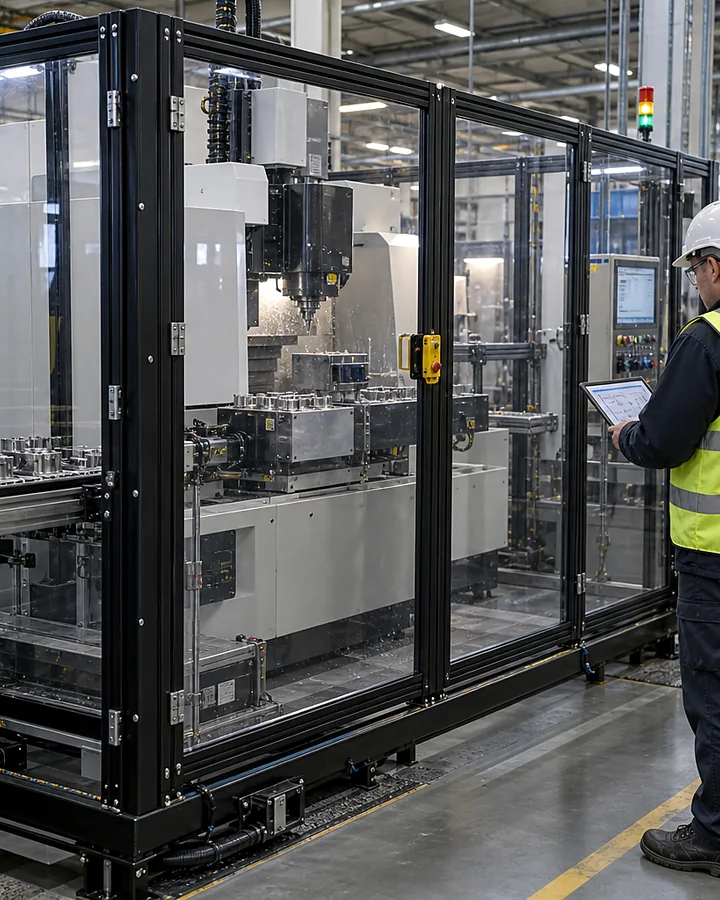
Ask every supplier the same questions
| Decision | What to ask | What to check |
|---|---|---|
| Hazards and Foreseeable Access for Grinding-Machine Guarding Projects | What purpose must each protective element serve, and which machine, wheel and access hazards does the assessment identify? | Machine/wheel information, photographs and assessed guard-purpose and access requirements. |
| Machine Motion and Stopping Behaviour | What motion and stopping behaviour affects access, and what evidence is needed for the proposed safeguard? | Recorded operating modes and competent assessment of the actual stopping/access conditions. |
| Operating, Cleaning and Maintenance Tasks | How are workpieces loaded and supported, and how are wheel changing, dressing, cleaning and fault investigation performed? | A task list and agreed isolation/access arrangements using manufacturer information. |
| Existing Control-System Architecture | Which existing control interfaces change, who owns them, and which functions require inspection, testing or validation? | An interface schedule with design, installation and validation responsibilities and boundaries. |
| Space, Visibility and Operator Ergonomics | What viewing, workpiece, environmental, mounting and access constraints apply to the real task? | A site survey including awkward workpieces, coolant/sparks/dust and nearby workstations. |
| Risk-Reduction and Validation Evidence | What assessment, installed-condition checks, relevant tests and updated records are agreed before return to use? | Expected and observed results, unresolved actions, limitations and responsible handover records. |
Include simpler approaches to grinding-machine guarding projects in your shortlist
| Approach | Often suitable when | Watch for |
|---|---|---|
| Grinding Machine Guards | A machine-specific assessment identifies a protective arrangement for the actual grinding tasks and abrasive tooling. | Distinguish containment, viewing and access-control duties; no universal screen or material specification is implied. |
| Fixed Physical Guarding where Access Is Rare | The assessment finds a fixed barrier practical for the task and the access frequency. | Review fixing, maintenance access and the required protective duty; fixed construction alone does not prove suitability. |
| Interlocked or Presence-Sensing Protection where Frequent Intervention Is Foreseeable | The assessment requires a further access-control concept because routine intervention affects the safeguarding approach. | Review stopping, access and validation. Sensing or an interlock does not itself provide physical containment of ejected material. |
Pause before choosing when…
- Only perfect or hand-selected examples of safeguarding existing machinery for grinding-machine guarding projects are available.
- No one has defined how risk-reduction and validation evidence will be evaluated.
- The normal range for hazards and foreseeable access for grinding-machine guarding projects is described only as “usually fine” but has not been bounded.
- Your operator, cleaning, maintenance or recovery access has not been considered.
- Quoted performance depends on another machine or data source that is not included.